






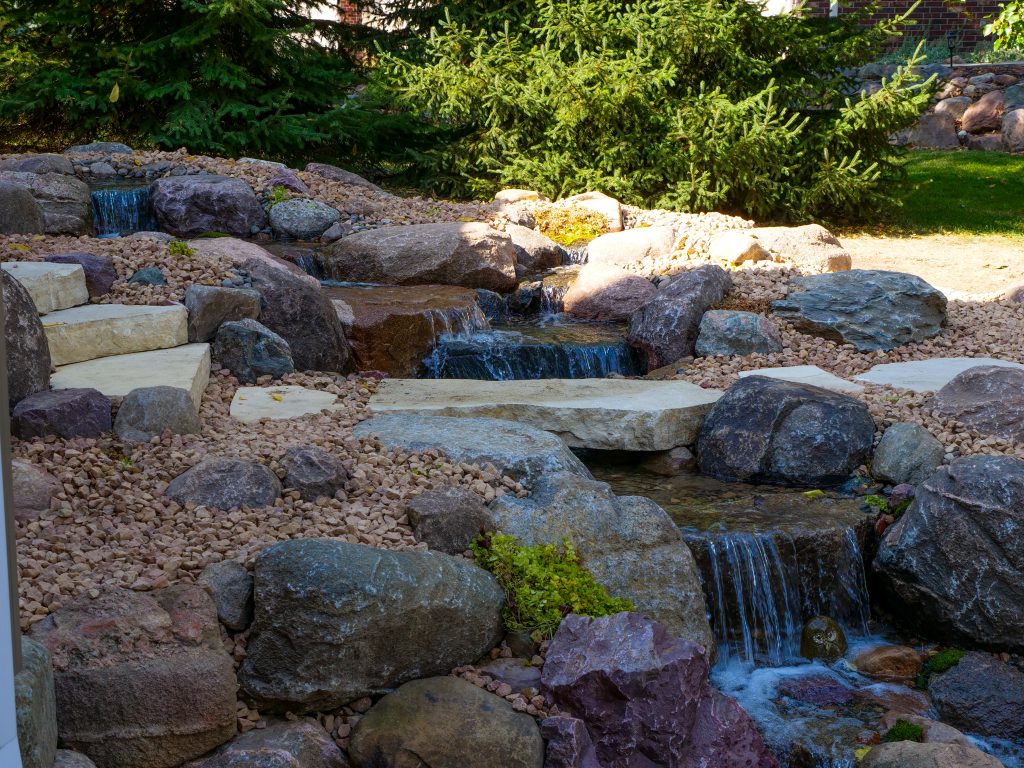

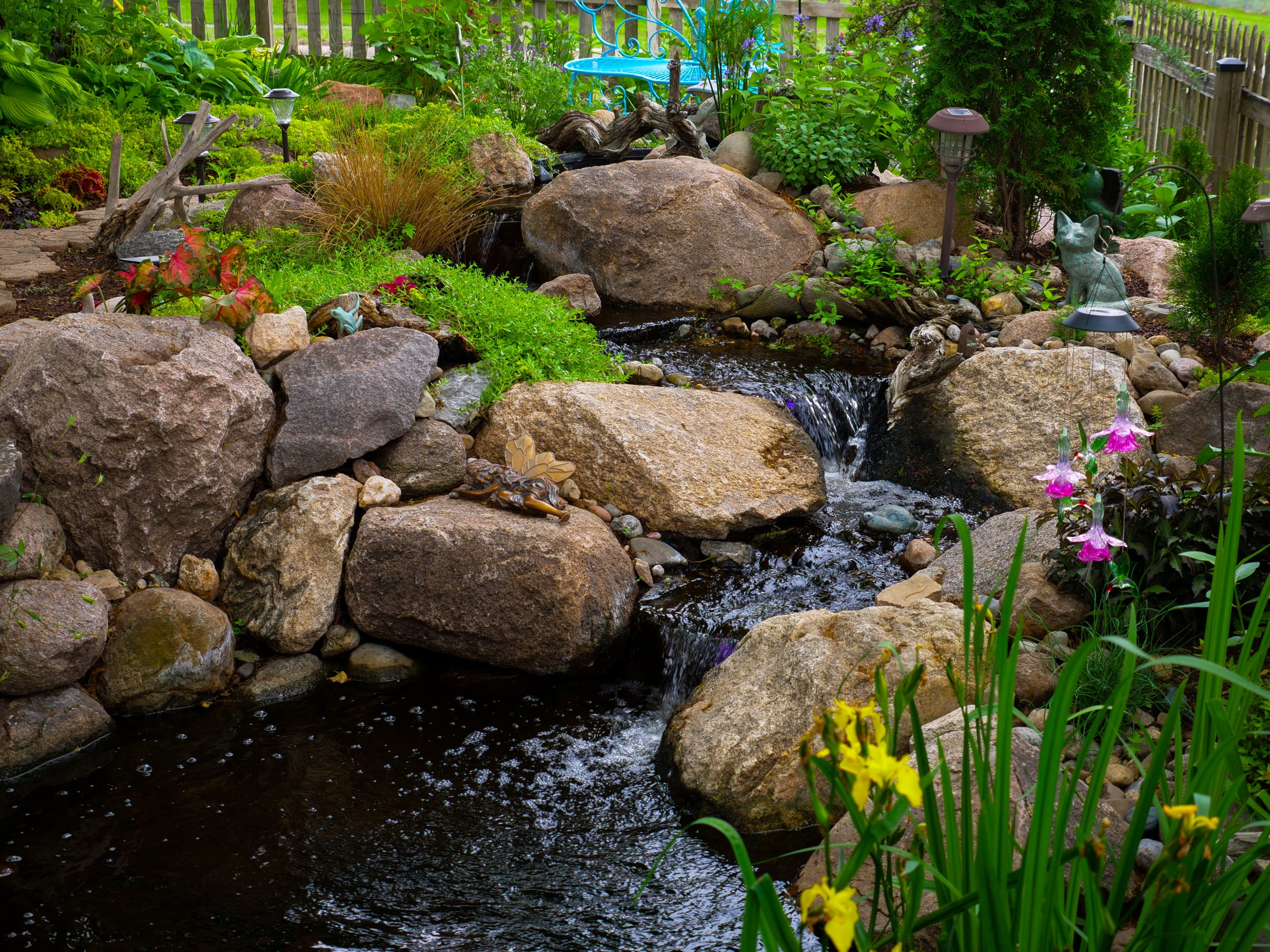

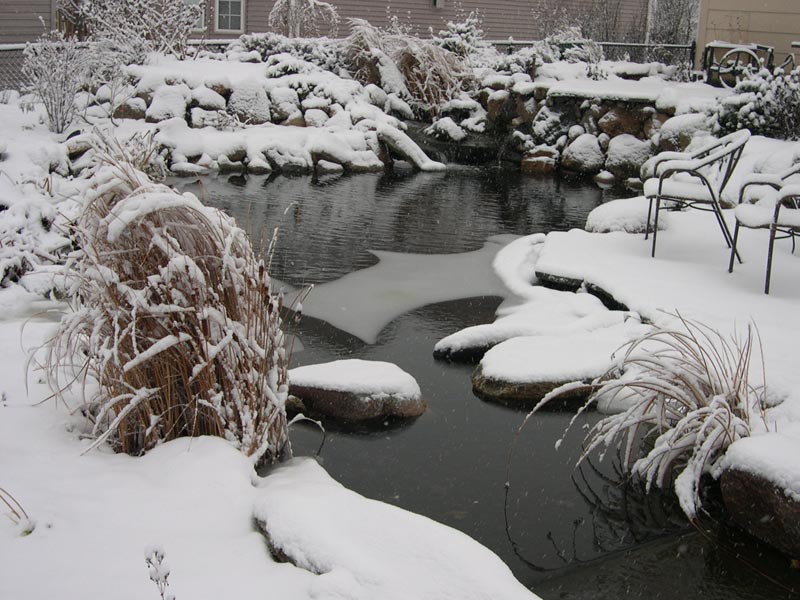
To winterize a pond in Central Iowa, clean out the leaves and debris, trim the plants, add cold water bacteria and stop feeding your fish once the water drops below 50 degrees Fahrenheit. Then choose one of two paths. Shut the pond down by removing and cleaning the pump, filter and skimmer, and keep a hole in the ice with a floating de-icer and an aerator. Or leave the waterfall running and keep a close eye on ice.
Here are the steps our team follows on winter shutdowns around Des Moines, how to choose between shutting down and running, and how to avoid ice damage.
Our 7 steps for winterizing a pond

- Switch to cold water food, then stop feeding. Feed cold water food between 60 and 50 degrees Fahrenheit. Below 50 degrees, stop feeding until spring.
- Take out leaves and debris. Organic matter left on the bottom breaks down under the ice, releases gas and turns into sludge.
- Trim the plants back. Cut back dying foliage so it does not rot in the water.
- Add cold water bacteria. These bacteria keep working in cold water and help keep it clean until spring.
- Clean and remove the pump, filter and skimmer. This is for ponds you are shutting down. Clean equipment lasts longer and is ready to go in spring.
- Install an aerator. An aerator adds oxygen. Set it higher in the pond, not on the bottom. On the bottom it can stir colder water down to where your fish are resting.
- Add a floating de-icer. A de-icer keeps a hole open in the ice so gas can escape and oxygen can get in.
If you put up netting for fall, take it down before the first real snow. Snow piles up on netting and can tear it or pull it into the pond.
Shut it down or leave it running?

Both work. It comes down to how you want to enjoy the pond in winter and how much attention you want to give it.
Shutting down means turning off the waterfall, pulling and cleaning the pump, filter and skimmer, and running a de-icer and aerator for your fish. It is the low-worry option for most ponds.
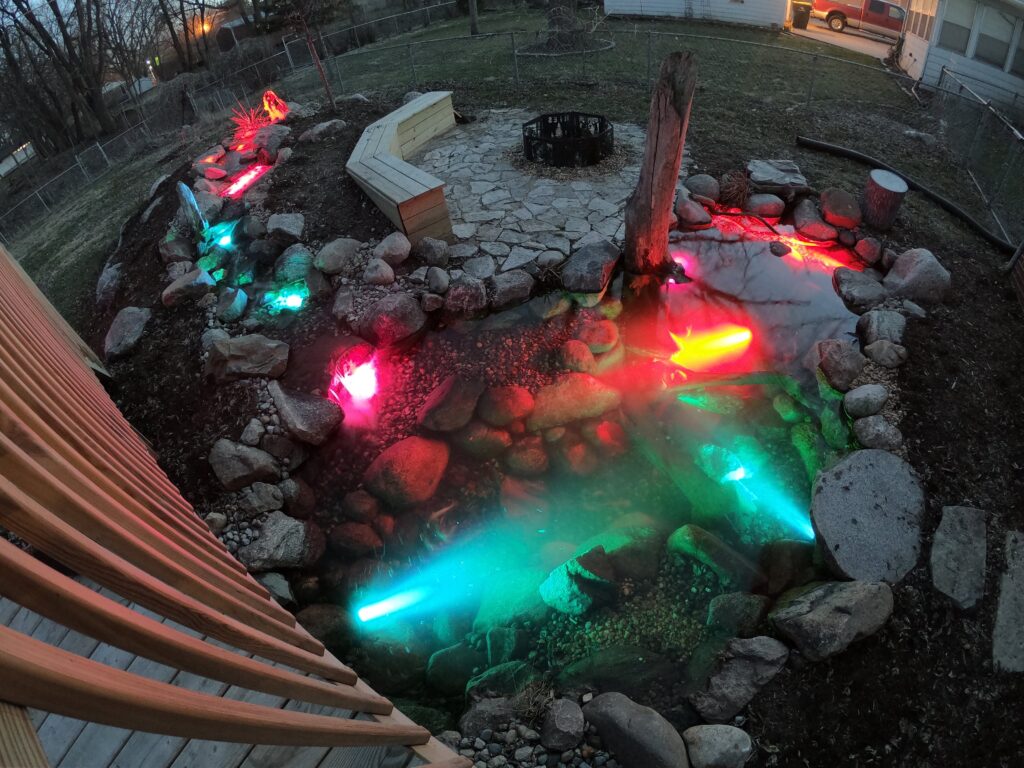
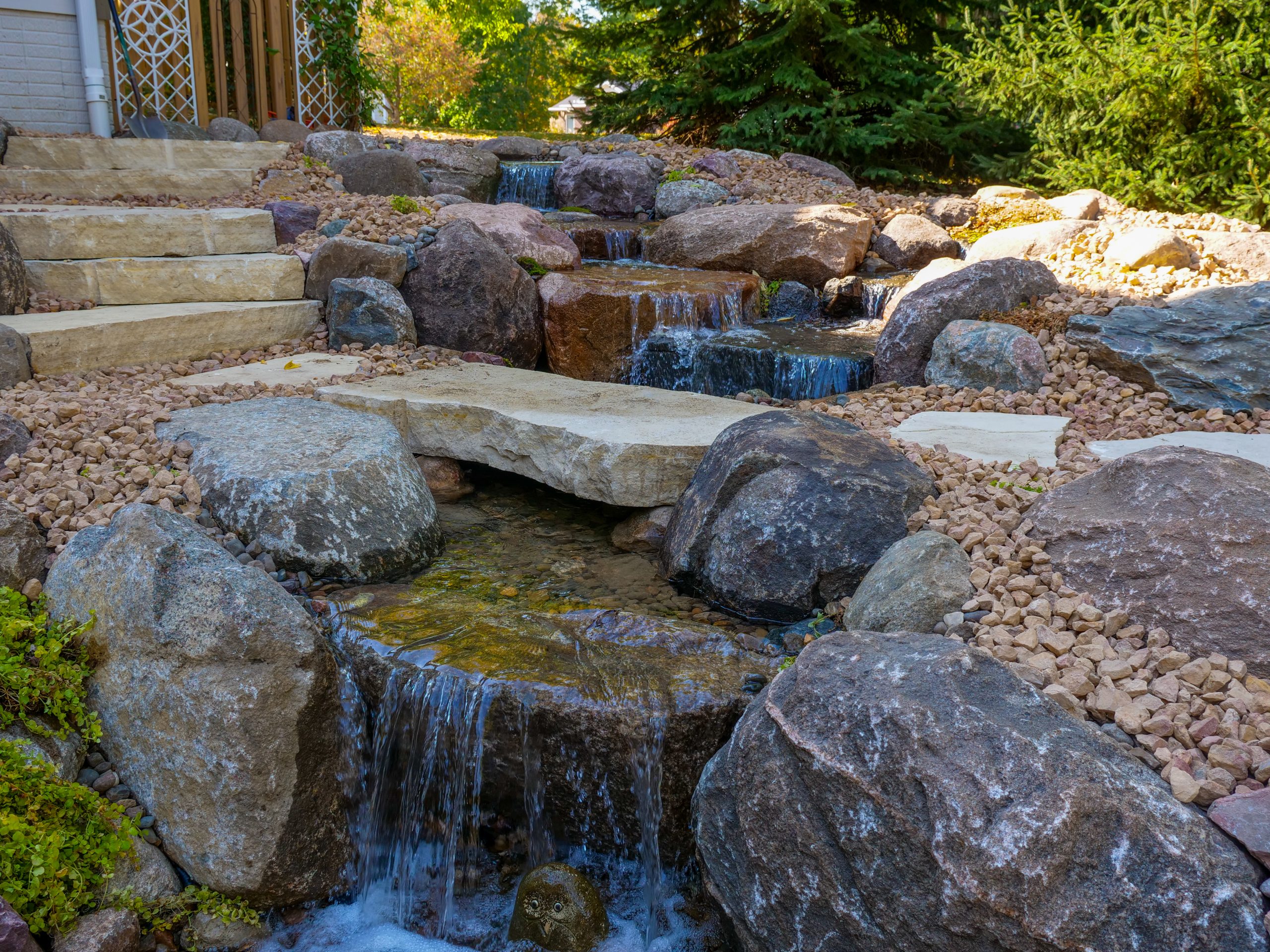
Leaving it running gives you a waterfall wrapped in ice, which can be beautiful. The catch is ice dams. Ice can build up in the stream and push water over the liner edge, so the pond loses water all winter. If you leave it running, check it every few days and top off the water when needed.
Our maintenance plans include a winter shutdown, so you do not have to do this yourself.
Protecting your pond from ice damage

Most winter damage comes from a few predictable problems.
- Do not break the ice. Hitting the ice sends a shock wave through the water that can hurt or kill fish. Use a de-icer, or pour a pan of hot water on the ice to melt a hole.
- Watch for ice dams. On a running pond, ice in the stream or waterfall can push water out of the liner.
- Protect the plumbing. Freeze and thaw cycles can loosen or crack fittings. Shutting down and draining the equipment prevents most of this.
- Expect some settling. Frost can shift rocks and pull liner edges down. That is why we check edges during the spring cleanout.
If your pond loses water over the winter or right after the thaw, it may be a leak. Our leak repair cost guide explains what an inspection involves.
Will my fish survive the winter?

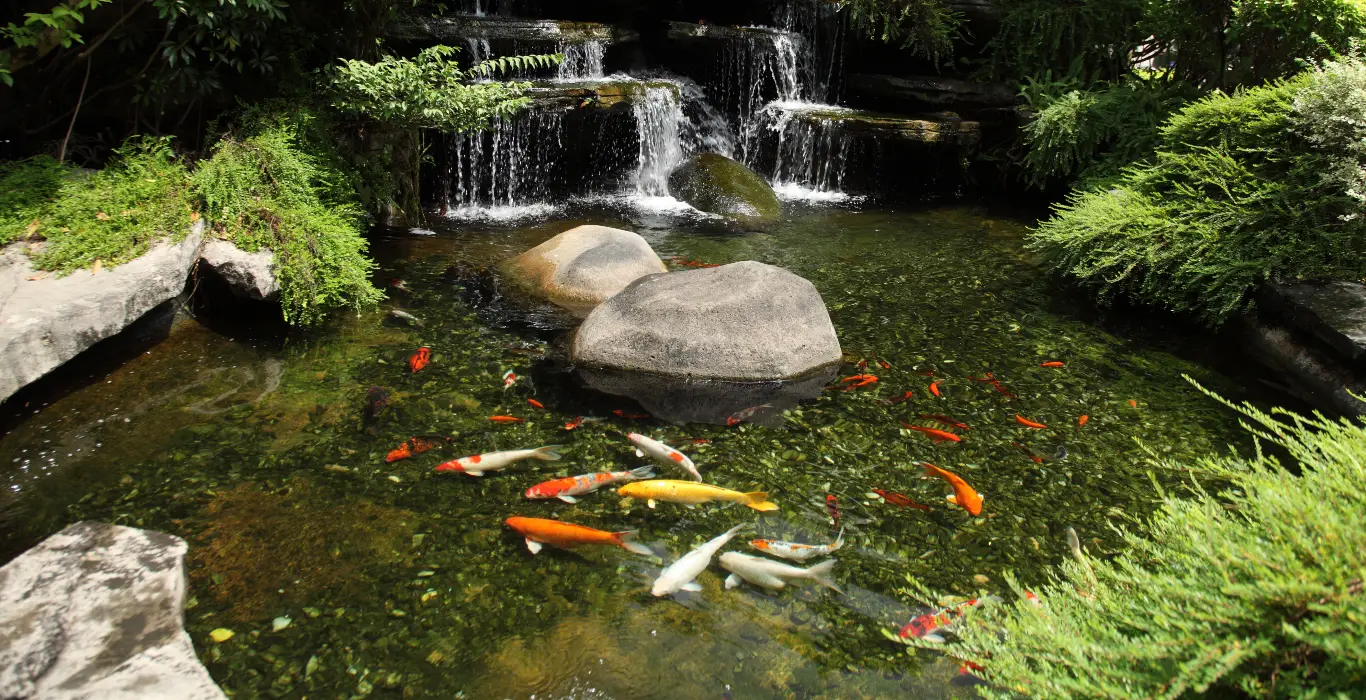
Yes, if the pond is set up for it. The pond needs to be at least 2 feet deep in some areas, have an aerator and keep a hole in the ice. Fish rest near the bottom where the water does not freeze. Read our full guide to pond fish in winter.
Checking on the pond during winter
You do not need to do much, but a quick look every week or two helps.
- Make sure the de-icer is keeping a hole open.
- Make sure the aerator is running.
- Clear heavy snow off the ice if it covers the whole surface for a long stretch.
- On a running pond, check the water level and look for ice dams.
Getting ready for spring
A good winterization makes spring easier. When the ice is gone, it is time for a spring cleanout. See our pond cleaning services and the pond cleaning cost guide. If you have not done your fall clean yet, start with our fall pond maintenance process.
Winter pond questions
Should I drain my pond for the winter? No. Leave the water in. Your fish need it, and a full pond protects the liner. Only the equipment comes out if you shut down.
Do I need a pond heater? Most ponds do not need a full heater. A floating de-icer that keeps a small hole open, plus an aerator, is what most Central Iowa ponds need.
Can I leave my waterfall running all winter? Yes, but watch it closely. Ice dams can push water out of the stream, so check the water level every few days.
Can you winterize my pond for me? Yes. We do winter shutdowns across Central Iowa, and they are included in our maintenance plans. Call (515) 208-4099 or request a quote.
Keep reading: How Can Pond Netting Help Protect Against Fall Leaves?.


